Tuesday, 17 March 2020

TRY A LITTLE HELP

GO THE EXTRA MILE

When you're new to something, it's so nice to get a little help from someone. Without it, you can often end up feeling frustrated and maybe even a bit dumb! Depending on the complexity of the subject, it can even make you feel like quitting altogether.

I'm not just talking about being a newly licensed operator - it could be that you're an advanced operator trying something completely new such as digital modes. Whatever it is, it's made all the easier when someone steps up to the plate and says "Hey, can I help you with that"?

I recently identified someone as being a bit of an expert in one of the modes of operation and approached him for some help. Even though he was a local operator, he pretty much slammed his door in my face (no, I didn't really go knocking on his door, lol).

What would it take to just give up a few minutes of your time to save a fellow-ham hours, days or even weeks of struggling? It seems to me that there's not many people out there who are willing to offer their help to others, so I am vowing to myself to be different and to offer others help whenever I am able to.

Thankfully, I have found a couple of locals who went out of their way to help me in certain areas and boy what a difference it makes! It means that you can focus on the enjoyment of radio instead of getting hung up on the technicalities.

Don't get me wrong, learning is all part of the fun, but oftentimes, radio equipment has so many unusual vagaries to which logic does not apply, lol. A pointer in the right direction from a mentor can make all the difference.

A big thank you to all the helpers out there!


Monday, 16 March 2020

ALINCO DJ-X2000

WIDEBAND RECEIVER


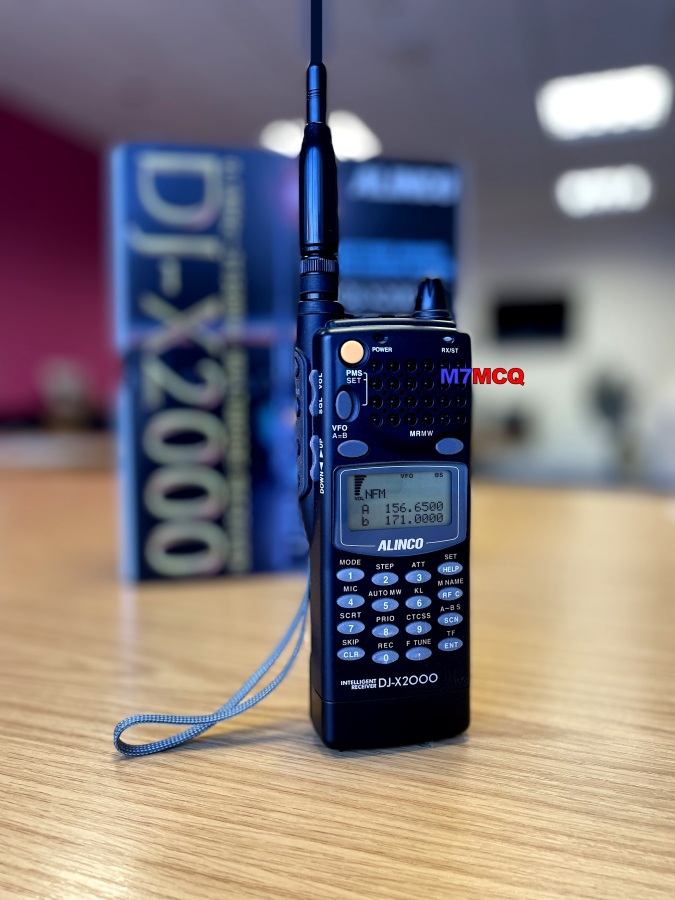
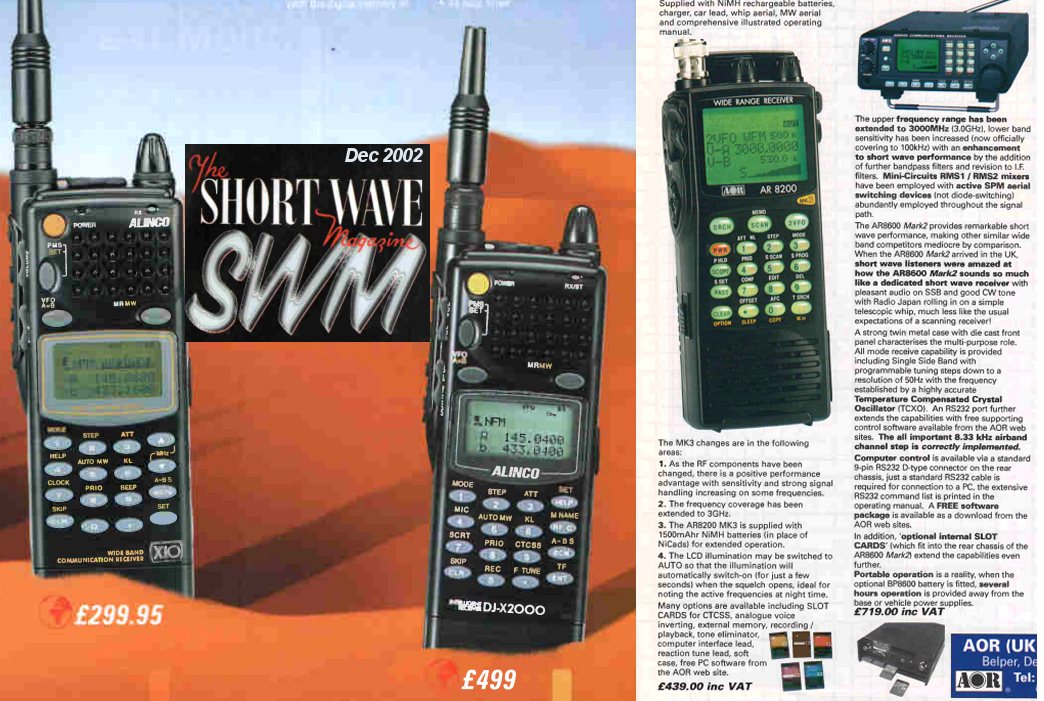
When I started this blog I mentioned that I had owned an Alinco DJ-X2000 and remembered it fondly as being "the most advanced scanner in the world". I think it was around 2001.  Well every time I see one in an auction, I usually put a cheeky bid in and I always lose out to someone else because these things still bring strong money, but this time I got lucky! So just like 15 years ago, I am the owner of Alinco's "Intelligent Receiver". 

This particular radio is in MINT+++ condition. It literally looks like it just came from Japan! Amazing condition, complete with all the original packaging and instruction manual. So glad I found this one.

Back in the day, they cost a lot of money and were considered to be the absolute king of scanners. 100 kHz-2150 MHz with no gaps, USB, LSB, CW, AM, FM, WFM, 2000 memories, built-in frequency counter, a bug-detector and digital memory to record audio.

Like new from the factory!!


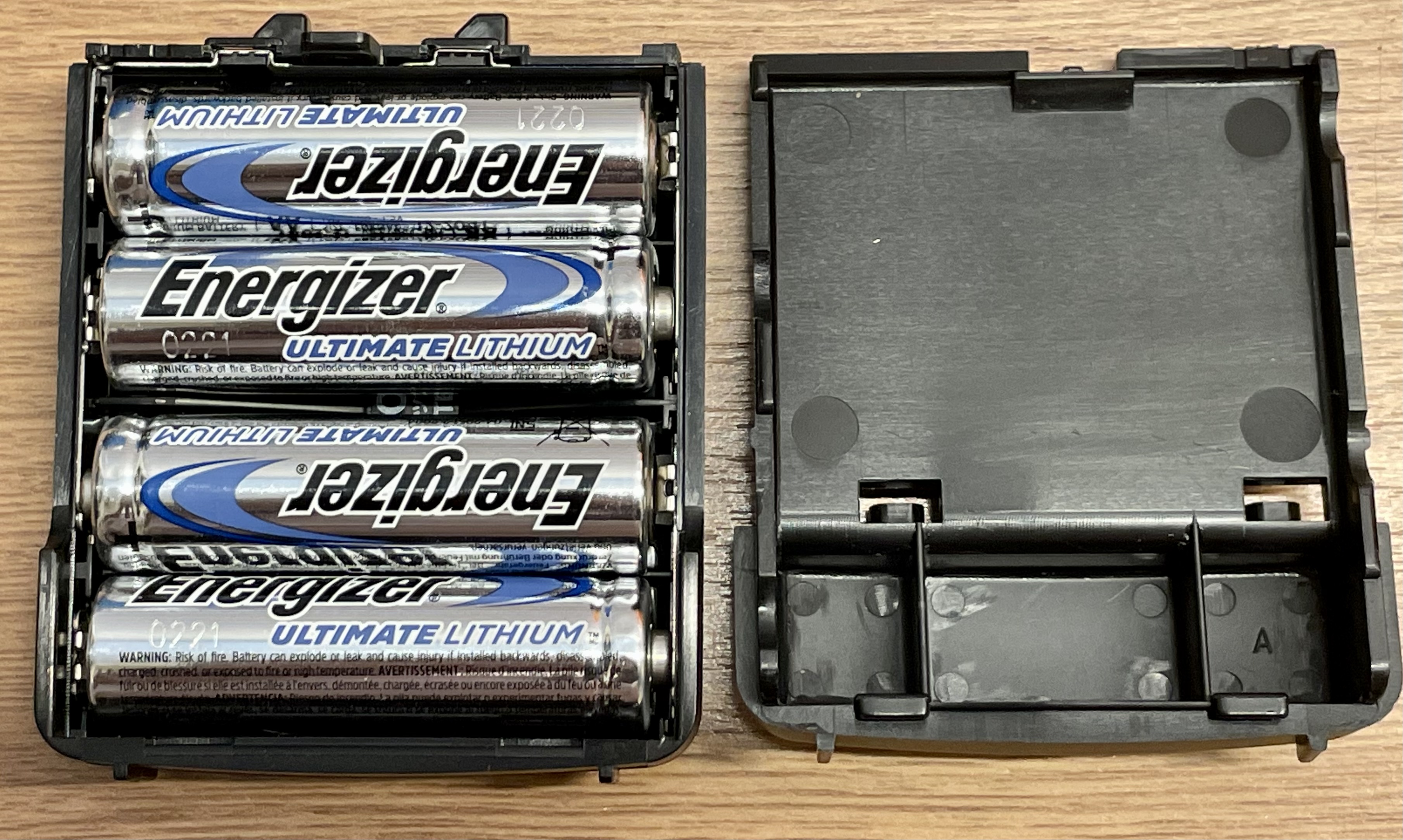
In addition to the standard accessories which come in the original box, I also have an 
EDH-16 AA Battery Box which replaces the standard battery pack for extra convenience. I use Energizer Ultimate Lithium cells in it. They’re excellent, long life batteries, but regular AA’s can be used no problem.

 The NiCad which came with the radio is the 4.7V 700mAh EBP-37N. This isn't the smallest battery, but neither is it the largest.
  
 
It’s so nice to have an X2000 again after all these years and as soon as you start to use it, you soon realise why it was held in such high regard when it was launched.

Operating is it a joy and there's not really much need for the manual - you just kind of figure it out! The only thing that I'd say is not as good as I remember is the scanning speed; I always thought it was super-fast but it is in fact quite average. You certainly benefit from putting the frequencies into memory sorted in ascending order so that the radio isn't switching backwards and forwards all the time. It makes sense to do that anyway. Another thing that will slow down memory-scan times is switching from one mode to another. Personally, when scanning I tend to be scanning a particular band (eg. Civil AirBand), so there's no need to move out of AM mode anyway. 


Searching (as opposed to scanning) is actually very fast on the DJ-X2000E, but this is something I use very little. 
The supplied antenna is surprisingly good on most bands but the radio obviously benefits greatly from a dedicated antenna on HF frequencies such as an End Fed Half Wave. In fact, it also benefits from a COUPLER/ATU to "tune" (match) the antenna to get the best possible reception. For this (and when I am using my old AOR AR-3000A) I use an AT-1000 which I bought secondhand. You could obviously use any manual antenna-tuner. So many SWL'ers fail to benefit from matching their outdoor antenna to their radio and therefore miss out on a far superior signal.

If you're unable to accommodate an large outdoor antenna, you could always try something like an AOR SA-7000 which does a pretty good job of covering everything. Some discones also offer surprising results on HF. Big external antennas often mean you’ll have to switch the Attenuator on. 

So after 20 years of holding it in high regard, does the Alinco DJ-X2000 still make sense in 2022? Well yes, I guess it does. My own runs about 1k out of tune so it needs VFO realignment - not sure if that’s a big job or not. To be honest, it doesn’t really matter does it, for general listening. If you’re up a hill listening to a two Americans having a chinwag on 14.100 but the screen shows 14.101, do you really care?🤷‍♂️

 Sure, things have moved on and there's some pretty darned clever (and cheap) SDR receivers out there with amazing sensitivity, selectivity and stability but the DJ-X2000E can still hold its own and it can be purchased for crazy low prices on the used market. 


£500 in 2002 equates to around £830 in 2022
 
This isn't a receiver for aficionados or DXers, but it has decent sensitivity and a MASSIVE frequency range with no gaps! It's compact and handy to carry around wherever you go. It's a classic and you'll get a lot of listening pleasure from it for very few bucks!


Main Features DJ-X2000E
  • 100 KHz ~ 2150 MHz continuous coverage
  • 2000 memory channels in 50 banks, 40 channels per bank
  • WFM, NFM, AM, USB, LSB, CW modes in many different tuning steps, including user-programmable step.
  • Fast scan speed
  • Easy to read dot matrix LCD display
  • Alphanumeric channel names and name tag search engine
  • PC programmable (See software details below)
  • Help Navigation so powerful, you may never need the manual (enters directly to the set mode of relative parameters from the help menu!)
  • Two-mode "Bug" detector finds hidden transmitters
  • Instant search function locks onto the nearest, strongest signal (new circuit design, patent pending)
  • Frequency counter, accurate to 1 ppm, uses digital TCXO first time in the receiver industry.
  • Field Strength meter
  • S-meter activated beep alerts you to nearby calls
  • Record up to 160 seconds of audio in digital memory
  • Inversion decoder for scrambled audio
  • FM stereo receiver (requires optional stereo headphones)
  • CTCSS decoder/tone scan
  • Two-level attenuator reduces strong or interfering signals 6 or 20 dB
  • 24 hour timer
  • Use 10 ~16 VDC external power or internal batteries (an optional DC cable is required for external power source)
  • Battery level indicator and battery save feature
  • Ni-Cd battery and quick charger included.
  • New design rubber-duck antenna for better reception, especially at lower frequencies.

    Specifications DJ-X2000E
    • Receiving Range: 0.1000 to 2,149.999950MHz Continuous (ie No Gaps)
    • Mode: NFM/WFM(mono,stereo)/AM/CW/USB/LSB
    • Antenna imp.: 50 ohms
    • Antenna terminal: BNC
    • Supply voltage: DC 4.8V (Ni-Cd battery pack EBP-33,34,37N), DC 6V with EDH-16 AA battery case, DC 10-16V external power source.
    • Typical operation with Alkaline AA in EDH-16: 30hours (1:4 battery saver ON)
    • Current consumption: approx. 150mA in normal reception, approx. 50mA with 1:4 battery saver at 6Vdc power source
    • Operating temperature: -10 to 60 C or 14 to 140 F
    • Frequency stability: Within +/- 2.5 ppm at operating temperature range AF output: 100mW or more 10% THD
    • Channel steps: Auto, 50, 100, 200, 500Hz, 1, 2, 5, 6.25, 8.33, 9, 10, 12.5, 15, 20, 25, 30, 50, 100, 125, 150, 200, 250, 500KHz, user-programmable
    • Memory channels: 2,000 / 50banks, 40channels in each bank
    • Program-Scan: 20 pairs
    • Priority watch memory: 1
    • Dimension without projection: 57 x 150 x 27.5 mm
    • Weight: 200g
    • System: Triple-conv. Superheterodyne
      1st IF: 814.5MHz or 304.3MHz
      2nd IF: 45.05MHz
      3rd IF: 455KHz
    • Typical sensitivity:
      FM/WFM 12dB SINAD, AM/SSB/CW 10dB S/N
      • AM:
        0.1 to 5.0 MHz: 1.5uV
        5.0 to 900MHz: 1.0uV
      • SSB/CW:
        0.1 to 5.0 MHz: 0.6uV
        5.0 to 900MHz: 0.5uV
        900MHz up: 1.0uV
      • NFM:
        5.0 to 900MHz: 0.5uV
        900MHz up: 2.0uV
      • WFM:
        5.0 to 900MHz: 2.0uV
        900MHz up: 4.0uV


PERIOD UK ADVERTS…


DEC 2022:
I switched my radio on today and nothing!! I figured the battery must be flat, so I stood the radio in the Desktop Charger and got nothing again - no red light, no green light, zip!

On closer examination, I detected crackling sounds as I wiggled the power plug at the back of the charger, so I stripped it down (very simple) and examined the PCB. From that I determined that there was a bad joint on the pcb-mounted power-socket, so resoldered it and tried again - bingo! Everything worked fine. I'm expecting another 15 years service :-)

Repaired and ready for another 15yrs


Sunday, 15 March 2020

REMOTE OPERATION RS-BA1

ICOM's REMOTE SOFTWARE

The IC-7610 has a built-in server which means that you don't need to connect it to a computer in order to operate it from a remote location. All it requires is a connection to the internet - mine is connected via a wireless hub.

Curiosity drove me to learn more about remote operation and then a fellow club-member at WMRC gave a talk on the subject using Icom's own software (RS-BA1). I already had a "copy" of this software and had tried to get it working previously with my IC-7100. I failed miserably, even though I managed to get the software to operate the radio perfectly through a direct PC connection (USB Lead).

Anyway, onto the 7610. Unlike the 7100, the 7610 is a DUAL receiver rig, so the RS-BA1 software had to be upgraded to V2 in order to provide control over both receivers. Once installed, I managed to get to the same position as before - I could control the radio using a direct PC connection, but not remotely.

After much research on the internet, I found some radio-settings that needed changing. Voila!! The software worked almost perfectly! If I twiddled a dial or switch on the software, it reacted on the radio. Every single aspect worked perfectly - except transmit!!

Damn! I just couldn't figure it out. I was using my Surface Pro-7 tablet with Windows 10 64-bit, RS-BA1 V2, the RS-28 VFO Dial and a Logitech G533 Headset. I went onto a 7610 Technical Facebook Group and asked for help, but everything they suggested, I'd already tried.

And then for some reason (desperation) I tried one more setting and BOOM, it was sorted and my speech into the microphone finally produced some SSB modulation in the radio, using a dummy load. I was very pleased!

Being an M7, I can only operate remotely from the same general location as the radio, so I can enjoy using the brilliant RX capabilities of my Icom from somewhere nicer than the shack in the summer months. I can use the remote software by controlling the radio via a LAN. I'm not giving access to other operators - it's for personal use only.


Apparently, there's a few other ways of operating your radio remotely including remoterig.com so it's worth looking around. I only used the Icom software because it was custom written by the radio's manufacturer and I guess it can't get any better than that. My only gripe with the software is that it won't 'expand' beyond the size shown in the photo above. Very annoying!

UPDATE : 

Ooops! My bad. I didn't notice that Icom slipped in a new feature in V2 whereby you can increase the panel-size from "normal" to large". In large mode, it is in all fairness, big enough even on my relatively hi-res screen.


Tuesday, 10 March 2020

RADIO CLUBS

MULTIPLE CHOICE

When it comes to joining a radio club, there's usually a few to choose from (in the UK at least) and it's important to remember that you don't have to limit yourself to just one.


I wanted to join BURY RADIO SOCIETY because I could see from their FaceBook pages that they were an extremely active club with lots of interesting stuff going on all the time. Sadly, there's a great big hill between my QTH and theirs. My car can drive over the hill, but my radio transmissions cannot, so it means that I can't hear any of their members on the weekly net. There's not much point joining if you can't even communicate with those involved. Such a shame.


Closer to home is BOLTON WIRELESS CLUB and they too are quite active and rather than weekly, they opt for fortnightly meetings, which suits me perfectly. They're a friendly bunch and the club works from a well lit, heated community center. Every time I've visited so far, they've had something going on, be it a Table-Top-Sale or an Educational Talk. Joining was an easy decision.


About 12 miles away from my QTH is the WEST MANCHESTER RADIO CLUB and it is here that I took my Foundation exam. The club meets every Thursday at a working man's club where the drink flows freely, lol. Again, another nice bunch of people, but the weekly meets are more of a social night than a radio night. That's nice too for a change now and again, but as a newcomer, I'm obviously keen to learn more about radio stuff. The WMRC have a very well equipped shack and some great antennas erected at the site.

Whether the club's regular meets are to educate, experiment or socialise, all the clubs still have Field Days, Rallies, Contests and other interesting stuff to do throughout the year, so you can join as many as you like and cherry-pick the best parts from each club. 

Needless to say, if you join a club, you will be expected to be a fairly active member and show some interest in club activities and help out when there's a bit of physical work to do (assuming you're able-bodied). All too many people join a club (any type of club) and avoid giving anything back. While not everyone can afford to bear the responsibility of being on the Committee or taking on a role such as Treasurer, everyone can do something to be a productive and helpful member.

So I'm a member of two clubs and enjoy both of them for different reasons. I don't think people should restrict themselves to one club if it doesn't meet all their needs. Join two and that way you're not only getting what you want from club membership, but you're also meeting more people, making more friends and benefiting from a wider range of knowledge.


UNIDEN UBC125XLT

AIRBAND SCANNER


Last year during a day-trip to Manchester Airport Visitor Centre, I nearly lost my Kenwood D74 and I vowed not to take it to places like that again! If you're out "playing radio", then you're very focused on what you're doing and you're using the radio all the time, but when it's a family day and you're focus is on aircraft, cakes, ice-cream and beer, then it's very easy to forget you've left your HT sat on a bench. So I decided to buy an AirBand Scanner and leave my valuables at home!

I thought about looking for an old favourite on eBay - the Yupiteru 7100 but damn, they still demand strong money and so too do the Alinco DX-2000's, so I dropped that idea and turned to the cheap and cheerful Uniden UBC-125XLT.


The 125 is a neat, compact and light receiver which covers 25-960MHz (with gaps) and has 500 memories grouped into 10 Banks of 50 channels. The channels can be given AlphaTags which is a nice feature. They typically sell for £120-£140 but I got mine second hand in mint condition, boxed with charger, standard antenna and a "Super Gainer" antenna.  The seller was advertising it on FaceBook's MarketPlace and I thought I'd try bidding him in the nuts, telling him that I was local and able to collect immediately with cash - he agreed :-) 

The radio is easy to program thanks to some free software that's available online, so it wasn't long before I'd got all my local frequencies into Bank 1, ready to go. I noticed that the previous owner had filled Banks 7,8, 9 and 10 with all the UK Military aviation frequencies, so I left them there.


Two 2300mAh rechargeables provide the power and regular AA's can be put in if required. I've got some Eneloop Pro 2500mAh batteries that I'll probably use. The radio can also work from mains power via the provided power-supply/charger unit. Plugging it into my Discone (outside on the roof) I immediately started to pick up all the Manchester traffic, plus the odd contact from the Isle Of Man. Sensitivity seems pretty good.

Scanning speed is pretty good and even when scanning my regulars in Bank 1, I can include all the Military channels without unduly slowing down the process. So overall I'm very happy with this purchase. The radios are already cheap (and good value) at £120, so my second-hand purchase was especially good.


UPDATE :  I only really wanted the scanner for AirBand, so I ended up selling this and bought the magnificent YAESU FTA-550L.


UNIDEN SPECS:


Frequency coverage from  25-88MHz, 108-174MHz, 225-512MHz and 806-960MHz with 5/6.25/8.33/10/12.5KHz frequency steps.
Includes Civil & Military Aircraft Band, VHF/UHF Amateur Bands, CTCSS/DCS Squelch Modes and has Alpha Tagging features.
Main features include:
  • 500 memory programmable channels in 10 banks
  • Alpha Tagging - each channel can be assigned an Alpha Tag for easy identification
  • Includes civilian aircraft and military aircraft frequency bands
  • Close call RF capture with Do-Not-Disturb
  • Close call temporary store
  • CTCSS and DCS squelch modes
  • Direct access
  • Lock-out function
  •  Automatic close call detection with tune into nearby transmission
  • Triple-conversion circuitry
  • Text tagging
  • Priority scan with Do-Not-Disturb and priority plus scan
  • Scan/Search Delay/Resume function
  • Custom/Quick/Turbo Search option
  • Search lockouts
  • Modulation
  • Display backlight
  • Signal strength meter
  • Memory backup
  • Key confirmation tones
  • Battery save and low battery alert
  • PC programmable
  • USB interface for connection to PC and for battery charging


Friday, 28 February 2020

ANGLEZARKE

SATURDAY 29th FEB - FIELD DAY

Come hell or high water, on Saturday I'll be over at Anglezarke near Chorley playing radio. The forecast isn't too good on account of "Storm Jorge", but if I keep abandoning trips out because of bad forecasts, I'll be 101 yrs old before the next outing.

Anglezarke is a local beauty spot about 5 miles from my home and is very easy to reach by car, with good parking for about 10 cars. It has a fabulous take-off out to the West, so it's good for Transatlantic DX and it's also good for South-West towards Wales.

The great thing about Anglezarke is that your spouse can also tag along and enjoy a bit of a picnic, beautiful views and maybe a couple of hours reading - all without having to climb a single hillside :-)

Once you're set up, you have open space and the Irish Sea in front of you but behind are the hills of the West Pennines and Winter Hill. The height of this spot is about 150M ASL as opposed to Winter Hill's 450M, so it's quite a bit lower down, but it's a lovely spot to work from. I'll be working mainly on 20M & 40M QRP frequencies 7.090MHz & 14.285MHz unless they're occupied by contesters! I will also try to get some 2M contacts into Wales and the Isle of Man if possible.

Listen out for me - and please - confirm QSO's. 
I add every contact to my QRZ Log and I send
every contact a card through eQSL.

YAESU FT-818ND
LDG Z-817 ATU
SOTABEAMS BANDHOPPER II 20/40
SOTABEAMS 7000HDS MAST

SOTABEAMS SPEECH COMPRESSOR
DIAMOND X-30 VHF/UHF
FLIGHTMAX ZIPPY 8Ah LifePO


=============================

UPDATE!

I arrived at Anglezarke around 10:15am and started to setup the SotaBeams 20/40 Linked Dipole with the fibreglass mast from the same company. I absolutely love this combo - the antenna just works everytime and it's very simple to erect and dismantle. Being resonant, a tuner is not required, but I always use my little LDG Z-817 ATU to get the perfect match across the bands. The telescopic mast is also a great accessory and saves you looking for trees!

The grass was MUCH wetter than I anticipated and within seconds I was covered in mud LOL. Mind you, it has been raining for the last two months!

Once the wire was erected, I connected the 6W FT-818ND to it from within the car (it was freezing cold) and tuned to 20M. The floor noise was incredibly low which was fantastic BUT the band was riddled with contesters - I struggled to find a free frequency to call CQ.

In the end, I gave up looking for a chinwag and decided to respond to some of the contesters. There were simply too many people shouting out and many of them were not following any sort of code of conduct! Eventually though, I managed to find some breaks and got through.

I feel that the SotaBeams Speech Compressor made a real difference. When you're struggling to be heard at QRP levels, this handy little device can make the difference between getting a contact in the log and getting hoarse, lol. If you've got an 817, 818, 857 or 897 I'd strongly recommend buying one of these - they're incredibly good value for money.

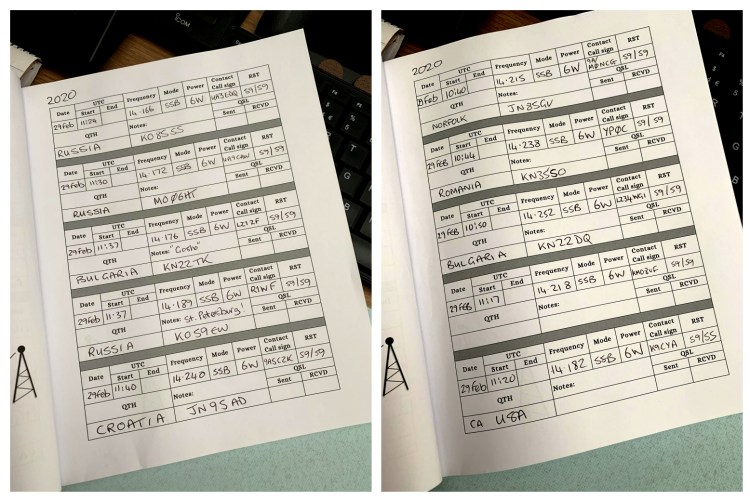
I started off at 10:40am with a guy from Norfolk (South East England) and then proceeded to swap Grid Locators with operators in Russia, USA (California!), Bulgaria, Romania and Croatia. Most of my contacts were Russian.

After a couple of hours I switched to 2M but then noticed the weather pulling in fast and made the wise decision to pull the antenna down. Minutes later it was lashing down with sleety rain. So it was only a short day out. Still, it was good fun while it lasted. Shame the competition flooded the bands and prevented normal chit-chat. Martin (K2TRD) came onto a contesting frequency but I had no chance to speak with him because it wasn't my frequency.

Back home now, warm and dry. Ready to go into the shack for the rest of the day :-)

View from the truck - nice and warm :-)

A couple of pages from the log

Saturday, 22 February 2020

MY FIRST QSL CARD

IT'S BEEN A YEAR, BUT...

After a year as a licensed Amateur Radio operator, I received my very first postal QSL CARD today and I don't mind admitting, I'm well pleased! 😀

K3LR