As far as I'm concerned, Amazon are done! I am officially banning them from my supplier list. It's been coming for a while now, but my most recent purchase has sealed their fate.
It's not one thing, it's quite a few. In years gone by, I applauded their range of products, their prices and their efficiency in getting the order on your doorstep quickly. Nowadays, it's absolutely terrible.
More and more often I'm finding that their prices are extremely uncompetitive and sometimes (where availability is an issue) they are actually asking for more than RRP!! One of the most recent examples of this was when I went to purchase a decent WebCam. I figured out which was the best one to meet my needs and soon discovered that although it was a very popular camera, no one had stock - except of course, Amazon.
No surprise there huh? But what did surprise me was the fact that they were charging £5 more than the actual manufacturer was asking on their website. I found similar example of this with other products across a range of hobbies that I have interest in.
Then there's the introduction of 3rd Party Resellers on Amazon; it's so easy to be fooled into thinking that you're buying from Amazon when in fact, you're buying from someone else. Someone who might not really give a damn good customer service. As far as I'm concerned, 3rd Party suppliers listing on Amazon should be marked very clearly as such instead of being in disguise.
And then there's the long distance 3rd Party sellers who (again) can give you the impression that you're buying from within your own country, but in fact post from some 5,000 miles away!Yes, you can be careful and discover the origin of the seller, but that's not the experience I want from an online reseller - I want to trust them to look after my interests and not to mislead.
And let's not even talk about some of the useless couriers that they now use 😲
Slow Boat From China
And then there's the DISGUSTING WASTE that they're responsible for. I've seen some truly laughable parcels arrive at my home/business. Huge boxes containing tiny items. I'm not even remotely "green" but it still makes me shudder at the ecological damage that Amazon are responsible for.
And then there's all the other underhanded things that Amazon get up to. Well, it's the end for me. I will no longer buy from them. Not at home and not at work.
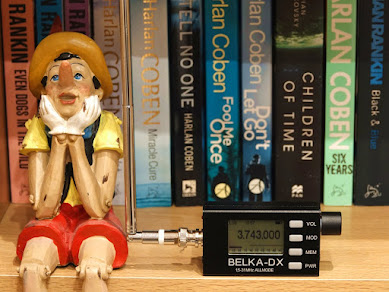
The Belka DX is nothing short of spectacular - for its size! And for the money. Who else sells a high performance HF receiver that fits in your shirt pocket, works superbly from a tiny telescopic whip and can be found for £150? No one!
It's a Direct Conversion SDR made of 'discrete' components. The Frequency range is 1.5MHz-31MHz, all modes including two AM modes and an excellent CW mode with a sharp 300Hz filter. Unlike other radios in my possession (including some modern sdr radios), the Belka DX tuning is extremely accurate!
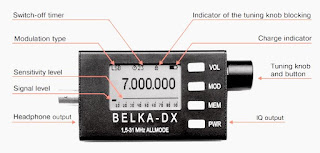
The smart steel case provides good RF shielding and a solid foundation for the popular BNC socket. Adjacent to the antenna socket is a headphone jack and a micro-usb charging point for the internal 2200mAh Lipo. On the opposite end of the case is the tuning knob and a stereo jack for the IQ-Out.
Originally, I was going to order directly from the maker in Belarus (Alex Buevsky, EU1ME) because I couldn't find a second hand one anywhere, but an attempt at an International Bank Transfer failed, so it kinda put me off ordering new. I saved a search on eBay and it wasn't long before a used one turned up at a fraction of the new price.
I collected the radio from the Post Office Hub (I'd missed the delivery) and inside the box was the radio, a telescopic whip and that's it!! No leads, no instructions. The dimensions of this matchbox-size radio really strikes you (pardon the pun). It's tiny! But boy, it feels and looks great. It oozes quality despite being so cheap to purchase.
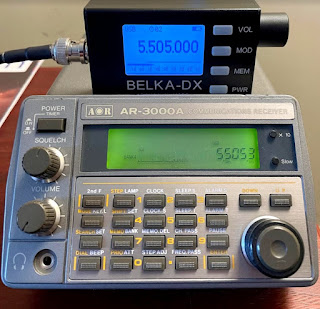
The first thing I did was stick the telescopic whip on it and switch it on. The device had been left on Shanon Volmet frequency 5.505 and the signal was amazingly loud and clear - and I was sat inside my car!! A good start. When I arrived home, I put the Belka DX next to my trusty old AOR AR3000A. Switching between the two on a shared antenna showed no difference (apart from the fact that the 3000 was ever so slightly off frequency (but she is 30yrs old)).
The display (despite being small) is fantastically clear - it makes the AR3000A look terrible. You can choose to have it backlit or not and there is full adjustment for brightness and contrast. At the bottom of the screen is the signal strength meter which provides a reading in 'dBµv/EMF' which is gobbledygook to me, but roughly converted means halfway along the scale is S9.
Tuning around using the external antenna showed that not only had the Belka DX got superb sensitivity, but it also coped perfectly well with big signals, showing almost no signs of overloading. This surprised me considering how good it was on the telescopic. The AR3000A for example, needs to be physically attenuated when connected to an outdoor antenna. Image rejection is over 70 dB, better than an Elecraft KX3 according to F6DFZ's measurements.
Speaking of attenuators, the Belka DX doesn't have one. And neither does it have a PreAmp. But what it does have (which I prefer) is an RF GAIN adjustment. Well actually, they call it a 'Sensitivity' slider. It's a very handy tool and something I use all the time to hear better (usually by turning it down slightly).
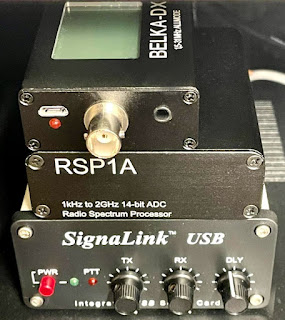
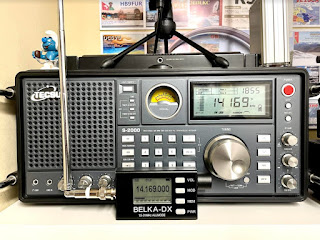
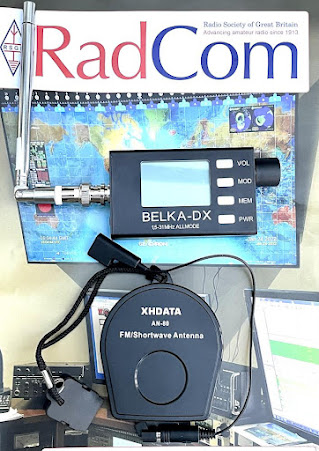
As you can see from the image below, the Belka is even smaller than a little RSP1A and it's absolutely dwarfed by my Tecsun 😂
The Belka DX that I purchased included the optional loudspeaker. It's not very loud, but it's fine indoors or in a fairly quiet outdoor environment. You can, of course, attach an amplified external speaker if you so wish. Probably better to use earphones (use a stereo jack or you will damage the radio). Choosing earphones with a long length of wire will assist reception by acting as a counterpoise.
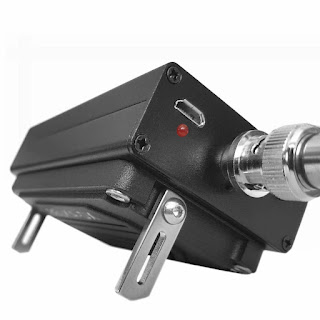
There is a 3rd party speaker option on the market, which includes a pair of neat folding legs which put the Belka at a good viewing angle on a table, but to me, this option just adds too much bulk and detracts from one of the radio's biggest attractions - its tiny size!
LS3PW - Optional 3rd-Party speaker bolt-on
The ergonomics of the Belka have been criticised by some, and I understand why!Selection of bands is cumbersome, to say the least. Without reading the manual, I was able to do everything I wanted and very quickly found 'hidden' menus/options. If you are used to modern radios, it will all come easy to you.
The radio has 32 memories and I used these to store the start-frequencies of all the HAM bands, before adding a few other favourites. It makes it so easy to get where you want to be. The VFO knob is the perfect size for the radio and it feels like it's going to last forever. (UPDATE : it doesn't!).
I can't wait to take this out with me and throw a length of wire into a tree. Having said that, I feel that the telescopic will be good enough on its own, especially if I'm outdoors in a slightly elevated location.
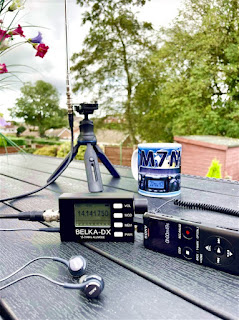
Above you can see the Belka being used outside in the garden with a mini-tripod (it's just easier to handle the radio without an antenna attached) and a recorder plugged into the IQ out socket.
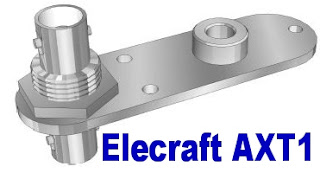
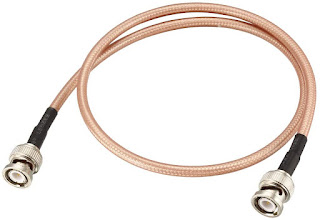
I ordered a 1M length of RG400 terminated in BNC sockets to use with the Belka for separating the antenna. You can get them on Amazon or Ebay (they're cheap as chips, so it's hardly worth making one up). The bracket that I use for mounting the antenna to the tripod is the Elecraft TX1
The BELKA DX is just an awesome bit of kit. I'd say it's more for the HAM fan than the traditional SWL fan, since it doesn't include LW or MW. That is a shame but the HF coverage, SSB and CW modes, filters, stability, frequency accuracy and overall performance make up for it. I think everyone should have one of these. Just stick it in your pocket wherever you go.
-Frequency range 1.5MHz - 31MHz -Modulation modes CW, SSB LSB,NFM,AM1 and АМ2 (pseudo-synchronous).ALL MODE -Frquency step 10, 20, 50, 100 Hz; 1, 5, 10, 50 kHz. -Adjstuble bandwith, low and high skirts 2-4kHz; 50 - 300Hz. -CW mode bandwith ~300 Hz; Adjustable CW pitch 500-1kHz. -Receiver front-end is optimised for using telescopic antenna (800mm) in the range 1.5 - 31MHz. -IQ output for viewing panorama on a computer -Signal strength indicator (S-meter). -Adjustable receiver sensitivity. -Image rejection ~70dB. -Timeout timer (TOT). -Battery level indicator. -Dial lock state indicator. -Mode (modulation type) indicator. -32 memory locations. -Built in audio power amplifier, designed to work with external loud speaker with impedance 4-8 ohm. -Charge and supply from micro USB port 5V. -Built in battery LiPo 2200 mA -Current consumption - around 80mA. Power consumption - 0.25mW with headphones. -Battery life - 24 hours when on headphones. -Built-in speaker (Optional)
Mechanical data:
- Cabinet measures 84х50х20mm
Thanks for visiting the blog. Leave a message below.
73, Tom, M7MCQ.
UPDATE : 20 June 2023
Yikes, the prices have shot up!! And my rotary encoder has started to act up a little.
Trying to get my 40-10M EFHW to work on 17M is like trying to fit a square peg into a round hole. Sure, with the right ATU I can force a match, but it's not ideal.
I purchased the bazooka direct from the manufacturer - a small company called Wire Antennas - the same place I got my EFHW from. When it arrived, I was a little surprised to find that the case-lid had quite a few scratches on it. Other than that though, everything else looked of high quality and a replacement lid was posted to me as soon as I notified WA about the problem.
When I opened up the box to fit the new lid, I thought the treatment of the coax-braid was a little "scraggy" but despite its appearance, it seemed solid enough. Bear in mind that this thing is only 30-odd quid, so it's not fair to tear it apart.
In the small garden at the back of my bungalow, I have an EndFed HalfWave (also from Wireless Antennas) and a half-size G5RV. I was going to take down the G5RV and put this Double Bazooka in its place, but in the end I decided to give myself an easy weekend by doing a trial-install in the attic instead.
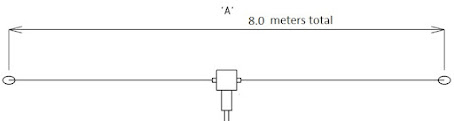
The antenna is only around 26ft long, so it makes for an easy installation in most spaces. In a flat-top dipole configuration, you only have to find 13ft of space for each leg and if you put it in an inverted-vee, you need even less space!
This 1950's design antenna is 98% efficient and it's extremely broad banded, meaning that the VSWR remains pretty constant throughout the 17M band - typically less than 2:1 so no antenna tuner is required whether you work in the CW or the SSB portion. When the antenna arrives, the two looped ends are left loose so that you can erect it and make small adjustments to the length to get the VSWR perfect for the part of the band that you use the most. Once you're finished tuning it, simply tighten up the two clamps and away you go.
Connecting my NanoVNA-F analyser to the antenna revealed that I needed to make some adjustments to focus it on the top end of the band which is where I work almost exclusively. As advertised, the VSWR was under 2:1.
Back in the Shack, I connected the Bazooka to my trusty ICOM IC-705 and was slightly disappointed with the noise level but this is no doubt due to the location of the antenna rather than the antenna itself. Looks like I'll have to make the effort to put it outside after all.
Anyway, I tuned around and found some activity. It wasn't long before I was breaking in to QSOs. Signal reports weren't very good, but again, that's because of the loft location.
So it's going to be needing another look-at when I get around to putting it outside. I'll update this post then.
I've got all sorts of fixed-length and telescopic antennas lying around the place and it's got to the stage where I wanted something decent. It had to be relatively compact, offer some gain and be a quality item, built to last. In the end, I plumped for the RH-770 from Japanese manufacturer Diamond.
The RH-770 is a 10-section 2M/70cm telescopic whip fitted with a BNCconnector and it is my intention to use it with my ICOM IC-705 when out and about. The antenna can handle 20W, so it'll be fine with the 705's maximum of 10W. Extended length is 930mm and 225mm retracted. It weighs just 85g.
The RH-770 has upper and lower sections with a centre-loaded coil and comes in a pretty tough plastic carry-case. In theory it provides a gain of 3db on 2M and 5.5db on 70cm. That's not bad for a simple telescopic in my opinion.
Although this is a quality item, it's clear that it's not really intended to sit atop of handheld transceiver! These things are far too vulnerable to accidents for that sort of operating environment. They're much better suited to more static operations such as SOTA or POTA where you're generally sat down and settled with your radio equipment and not moving around. Very long antennas on portable radios always puts strain on the solder-joint of the radio's PCB.
The RH770 isn't different to any other telescopic in that care is needed when extending and retracting. It's vitally important (for long life) that the operator exercise caution by not being over-zealous when pulling out the sections to the limit. It's even more important to retract the antenna by putting the thicker sections away first. Forgetting to do that may result in a breakage to the thinner sections of the antenna.
One of the first things I did with the RH770 is connect it to an antenna analyser to see how resonant it was at different lengths. For this I used my NanaVNA-F and mounted the RH770 on a small tripod.
The test started with the antenna fully extended on the UK Calling frequency of 145.500. The result was a solid performance - 1.1:1 VSWR. If you touch the antenna, the SWR actually drops, so maybe I'll try attaching a counterpoise wire.
Before I mention the UHF figures, I should point out that I'd been watching a YouTube Video about the RH770 where a guy was using the antenna on 70cm with the top section fully extended and the bottom section only out about 10mm 😮
That seemed a bit daft to me, but I figured he knew what he was doing, so I tried the same and then told myself to stop being silly and leave the antenna fully extended on both bands. That was, after all, what it was designed for and the reason that it had a coil in the middle.
Needless to say, fully extended on 70cm (focused again on the UK Calling Frequency of 433.500) the antenna returned a VSWR figure of 1.2:1
Those figures are more than acceptable and I'll be testing out the 'real world' performance of the RH770 out in the field this weekend with the ICOM IC-705.
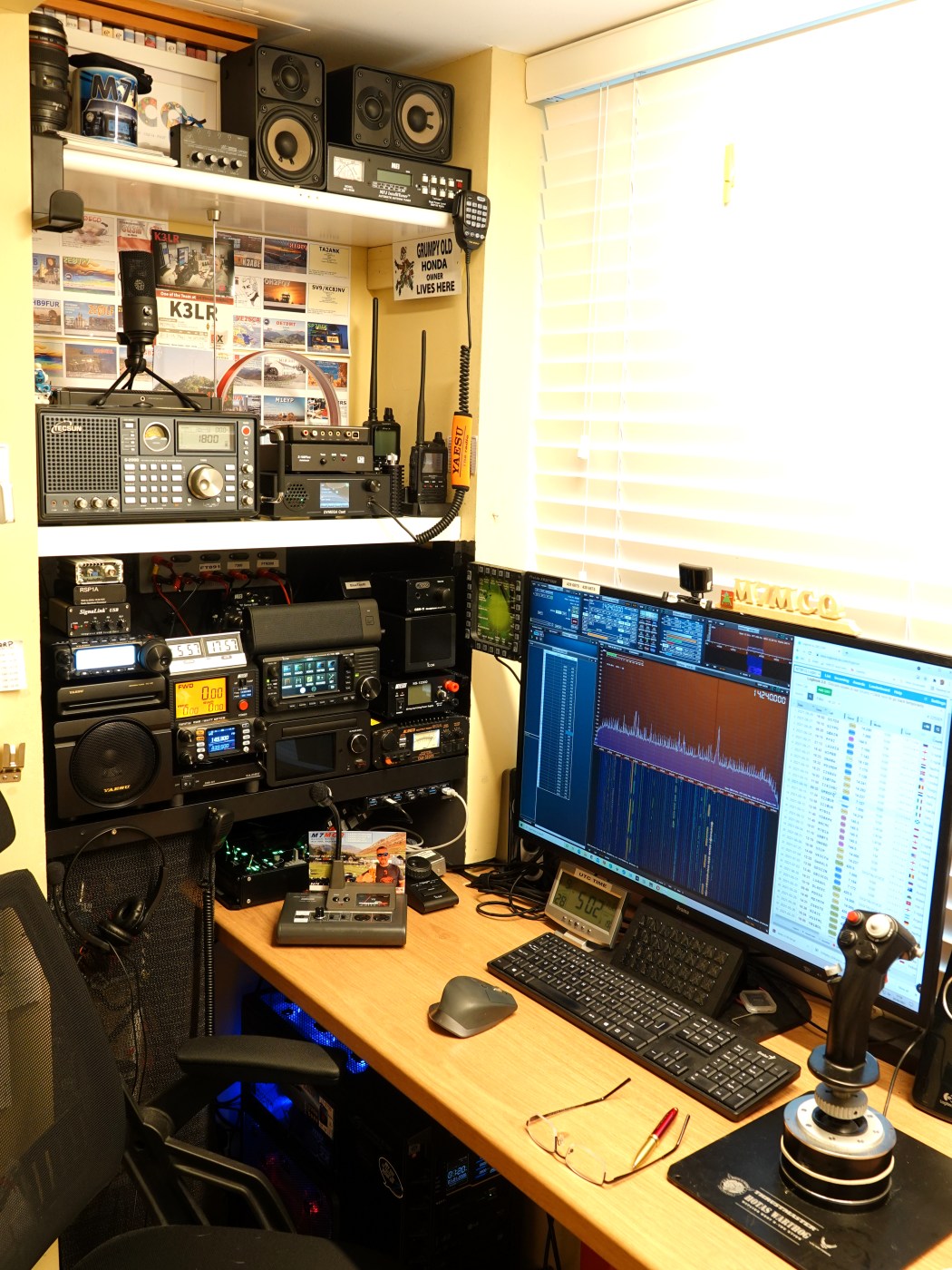
When my shack gets into a bit of a mess (which is often), I start to lose interest in spending time in there. This was happening recently because I'd removed the big MB1 base station and it left everything looking untidy. The answer was to devote some time to getting my house in order.
The new FT-891 needed to be permanently setup and it was important to do a proper installation complete with the SignaLink USB to give me FT8 capability and the RSP1A to give me a Panadapter and Waterfall.
The SignaLink was straightforward but fitting an RSP1A meant introducing another piece of hardware to isolate the RSP1A from the FT-891's transmissions. I achieved this isolation by placing a clever little device called an MFJ 1708B-SDR in the loop.
The unit works in two ways - one is by sensing RF and the other is by detecting a control signal from the FT891's PTT circuitry. The latter is the preferred method and it is achieved by purchasing a CAT cable which has an RCA Phono lead that is connected directly to the MFJ-1708B. Such a lead is available from Techtronics here in the UK.
The “B” series offers better isolation, achieved by additional relay isolation, and is specified up to 450MHz. An internal hybrid splitter reduces the antenna loading effect and provides isolation between the rig’s input and the SDR input. A TX LED on the front panel provides visual confirmation of correct operation when the transmitter is keyed. The MFJ-1708B-SDR features 3 SO-239 connectors, the MFJ-1708B-SDR-S substitutes an SMA female connector for the SDR connection.
It was quite a bit of messing around reorganising the shack because there's no way to access the back of the radio equipment (it's all mounted on shelves in a tiny alcove), but it's all sorted now and it's good to have the flexibility of SDR UNO software.
I'd forgotten how good this software is. It integrates perfectly with the 891 and it obviously permits one to listen through the radio or through the computer speakers. A friend recommended installing OmniRig but I'd already got it running in the background from a previous installation - I just had to switch ini file to suit the 891.
I also took the opportunity of bringing the DVMEGA CAST into the shack. I now have LW, MW, HF, VHF, UHF, C4FM, DSTAR and DMR (plus everything the RSP1A receiver provides (which includes Airband and Marine, etc)).
This is a quick review of a new radio which I bought (Sep 2021). It's a really nice 160-6M mobile with a built-in 3kHz Roofing Filter and a nice set of (32bit) DSP tools to dig out the weak signals and make them intelligible. It's very compact and weighs under 2 kilos despite housing a 100W amplifier.
NOW PLEASE BEAR IN MIND that this is no technical review - it's just a lowly M7 Operator talking about a radio. I don't have a degree in electronics and my oscilliscope is currently out of order 😂. Too many people get their knickers in a twist if you say anything negative about their beloved radio. And before you go spending money on a new radio, always consider investing in a better antenna first.
When this radio was due to be launched, many people though that it was going to be a replacement for the FT-857 Shack-In-A-Box - maybe even an SDR - but the truth was, Yaesu wanted to keep making the 857 because there was still plenty of demand for it. The '91 was aimed at a different buyer altogether - someone who wanted a more specialist HF mobile rig - a more up-to-date Triple Superhet with modern DSP.
Some hams have enough spare money to buy a 100W radio to keep in the shack and another one to keep in their Truck or Field Box. Others can't afford multiple radios and need a single radio to meet all their HF needs and this could be it. The FT-891 is a superb radio for the budget-conscious operator - it probably can't be bettered in terms of performance at this price level. Price-wise, the closest thing to the 891 is the FT-450 which is much older technology and lacks the sophistication of the 891.
The radio design features a detachable head-unit, allowing you to hide the base unit somewhere convenient and have the head-unit in a convenient location (eg on your vehicle's dashboard or centre-console). Needless to say, you'll need a "Separation Kit" to do that, which costs extra.
I've always fancied an 891 but other things (radios) kept getting in the way. Eventually, I got one, along with some accessories.
Separation Kit YSK-891
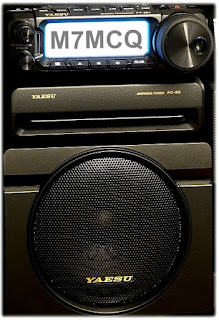
As soon as the 891 arrived, I started to look for a matching FC-50 ATU. Searches revealed limited options; there's not many of these around right now, but eventually I found one in stock.
The FT-891 is a fabulous radio, but it’s even better with its matching ATU!
Once I got the gear into the shack, I set about doing the hateful job of updating the firmware. There was an update for the main unit and another for the DSP, but the LCD didn't require anything. It's important to install the proper drivers from the YAESU website before plugging a USB cable between the radio and computer. Read the FirmWare Installation Guide very carefully before proceeding.
With the FT-891 running the very latest firmware, I plugged it in and performed a quick radio test on 40M & 20M with a Special Event Station 3Z20UR and received good reports both times using low power into an EFHW. For this first test, I actually hooked the radio up to my MFJ993B tuner because it was already setup on the shelf.
Having confirmed that the radio was performing as it should, I loaded HAM RADIO DELUXE V670269 and configured it for the 891. It performed flawlessly and so I spent a few minutes creating a new layout.
Spending more time playing around with the rig, I discovered that I wasn't totally happy with the audio from its speaker, so I plugged in an external speaker and there was very little improvement. I was starting to think that the radio sounded a bit tiring!
YAESU FT-891
And then I remembered to do what I'm always telling others to do - TURN DOWN THE RF GAIN!! Once I'd remembered my own advice, the radio's audio changed dramatically from being loud, noisy and annoying, to being pleasant to listen to - matching its reputation. The (mono) speaker socket at the back of the radio is further supplemented by a socket on the side of the front panel. This extra socket can be used with a speaker or a pair of stereo headphones (not a headset though).
The FT-891 is a very highly specified radio with internals similar to the FT-DX3000 and it's amazing how they crammed so much into such a small package. Needless to say, there has to be compromises with such a small rig and this does, of course, mean that there's not many physical buttons available. Instead, you have to go into the menus - and there are lots of them! Thankfully, the big screen (relative to the older FT-8nn radios) makes the menus easy to read.
Having previously owned an FT-818 and an FT-897, I'm used to the Yaesu menu system and I don't struggle with it at all. Most of the time I set everything up and it stays the same anyway! There are 3 customisable buttons on the front of the radio and that's enough most of the time. All the buttons on the 891 are illuminated by the way👍.
It puzzled me to find that there is an unused button on the radio which could have been assigned to a frequently used task. Perhaps they’ll do something with a future update.
FT-891 & FC-50 Rear View
Just a minute ago I was listening to someone on 14.285MHz and someone else started up a QSO on 14.286MHz. Using the tools built into the FT-891, I was easily able to remove the interfering signal. Moments later I was listening to a guy on 40M with a pile-up and he was doing his very best to pick out the callsign of a distant station. I too was struggling to hear him, but with a bit of the 891's DNR and a -400Hz shift, the callsign came easily. None of this is new of course when you're sat in your shack with access to full-size base stations, but it's good to see such a wide range of tools in something at this size and this price!
Its performance 'in the flesh' does not reflect its performance 'on paper'. Time and time again I've heard people loudly sing the praises of this radio despite some unfavourable measurements taken in review labs. It just goes to show that things can add up to more than the sum of all their parts.
AUDIO : The FT-891 has plenty of options to adjust the audio qualities of both RX and TX. Using the MONITOR function, a pair of headphones and a dummy load, it's easy to experiment with the TX settings to get the best sounding transmissions. Having said that, the default settings and standard mic sound really good! I also have an ADONIS desk-mic which I tried with the radio and it sounds fabulous. The beauty of the Adonis is that it has a speech-compressor built-in with a rotary dial to make adjustments on the fly. Plus you can switch the mic between two radios. I have mine connected to the FT-891 and my FTM300.
On 40M, Maurits from Norway (LA3XIA) was kind enough to give me a radio-report and focused strongly on my audio using this mic. He was incredibly detailed and equally complimentary. As a fan of ESSB, he told me that he didn't think there was anything that I could do to improve it - it was that good! He described it as "Superb"! I also worked Matt from Florida (W1MBB) on 17M (my very first phone contact on that band). Matt was also complimentary and said my signal was very punchy but still easy to listen to. These reports were the best I've ever had - using any radio/mic combination!
DATA : Although the 891 has a USB port, it is only for CAT control and cannot be used for DATA modes such as FT8 because there's no built-in sound card, so you'd need to add a SignaLink or CT39Apatch lead. That's fine by me at this price and I'll update this page as soon as I've finished a comprehensive FT8 session with WSJT-X. In the meantime, here’s the settings you need to alter in the radio for DATA modes….
Yaesu FT-891 Digital Operations Settings Menu
5-6 Cat Rate: 38400
5-7 CAT TOT: 1000 msec
5-8 CAT RTS: Disable
8-1 Data Mode: PSK
8-9 Data In Select: Rear
8-10 Data PTT Select: DAKY
8-11 Data Out Level: 50
8-12 Data BFO: USB
16-03 HF Power: 10 (I’m qrp but you could go up to 30W)
*Make a note of the original settings.
Some people have compared the FT-891 with the IC-7300 and personally, I think that's a bit of a silly comparison to make - they are like chalk and cheese. I've had both and I can say from direct experience that they are both superb receivers - I'm sure though that many 7300 die-hards would fail to identify their radio in a blind-test using a shared external speaker.
The 7300 is a base station and the 891 is a mobile. One's a triple superhet and the other's an SDR. One's got a large colour TFT touch-screen with panadapter and waterfall and the other has a monochrome LCD with a basic scope. One is twice as big and twice as heavy than the other. One costs almost twice as much as the other.
There's no bigger Icom fan than me, but I'd be the first to admit that I've had more success hearing weak or noisy signals with the 891 receiver and tools than with the 7300. Having said that, the 7300 looks drop dead gorgeous and has all that Icom intuitiveness and functionality.
You can't ask for a small radio for mobile work and then ask for a hundred buttons, knobs and dials. And if your "old eyes" struggle with the menu in a restaurant, they're hardly likely to do well with a screen that's 30mm high! Let's get sensible! 😀
I was pleased to see that you could add Alpha-Tags to the radio's memories 👍 You can also buy RT SYSTEM's programming software which not only aids the input of memories but also let's you save them to PC in case the worst should happen.
I should point out that the "RT-42" USB CABLE is a load of nonsense!! DO NOT purchase it because you'll just be paying three-times more than you'd pay for a regular USB-B lead.
-*-
The YAESU FC-50 ATU was designed specifically for the FT-891, so it looks very good when connected to it. As usual, these OEM tuners are pretty rubbish when compared to third party offerings and will be good for 'near resonant' antennas but next to useless with something like a G5RV. The FC-50 comes with fixing plates and every cable required to connect the two devices together. All that's required in order to get up and running is a quick change to a menu-setting.
As indicated previously, the 891 had been connected up to my MFJ993B and it works fine (as you'd expect from this very expensive unit). The FC-50 gives a solid performance on 40/20/15/12/10/6. The antenna used in this test was a multi and EFHW from wireantennas.co.uk.
On antennas which are closer to resonance, it works incredibly quickly and effortlessly and isa very worthwhile addition in the shack. I've just ordered a Double-Bazooka antenna solely for 17M because I don't want to be without that band - it's something that I've just 'discovered' and wish to explore more.
Double Bazooka for 17M
SUMMARY :
This really is a cracking radio and I don't think it can possibly be touched £ for £. That's the long and short of it. Should you buy one?? Well you should definitely consider it if you want a mobile which gives fabulous HF performance with no bells, whistles, smoke or mirrors. It's got some superb noise-reduction tools and is easy to operate once you get the knack of Yaesu's Menu System - and let's face it - people have been coping perfectly well with the 817, 818, 857 and 897 for many, many years! This is a radio that you can truly be happy with for many years - sat at home in your shack as a base station or outdoors on a Field Day or even POTA/SOTA!
What you shouldn't do is compare it to other radios that have bugger-all to do with it. Just ask yourself what else is available on the market for £680.
Thanks for visiting the blog - feel free to leave a comment below.
Take care, 73, Tom, M7MCQ.
SPECIFICATIONS
FT-891
The FT-891 offers up to 100 watts of HF/6m output power with efficient dual internal fans, coupled with Yaesu's legendary receiver design,triple conversation with a 1st IF frequency of 69.450MHz for really outstanding performance.
3KHz roofing filter equipped as standard
Detachable front panel for convenient mounting and operation
Large dot matrix LCD display with quick spectrum scope
Specifically designed external antenna tuner FC-50 (optional)
Ease of operation
Large diameter main tuning dial with torque adjustment
Pop-up menu for quick and easy operation
Multi-Function knob
Large transmit/receive indicator
3 x programmable front panel function keys
Up to 100 watts output power
The FT-891 provides a stable 100 W (25 W AM) high power output. High reliability is assured by the transmitter careful circuit design with efficient thermostatically-controlled dual internal fans and the diecast chassis.
FT-891 Real IF DSP provides effective and optimized QRM rejection The 32 but high speed floating point DSP (max 3000 MIPS) provides effective cancellation/reduction (DNR) of the random noise that is frequently frustrating in the HF frequencies. Also the AUTO NOTHC (DNF) automatically eliminates the dominant beat tone. The CONTOUR and the APF are very effective receiver noise reduction tools in the HF bands operations. The YAESU original DSP QRM and noise reduction functions are provided.
Just a quickie to help out anyone who has suffered the same issue as me. I switched the FT-891 on tonight and found a problem - the FT-891 was stuck at the logo screen. It wouldn't progress beyond the startup screen and none of the buttons worked.
I tried the Vulcan Nerve Pinch ( F, CLAR then PWR) but it made no difference.
The FT-891 stuck at the start-up screen is a USB issue! Simply disconnect the USB lead from the back of the radio and try again. 73, Tom, M7MCQ.
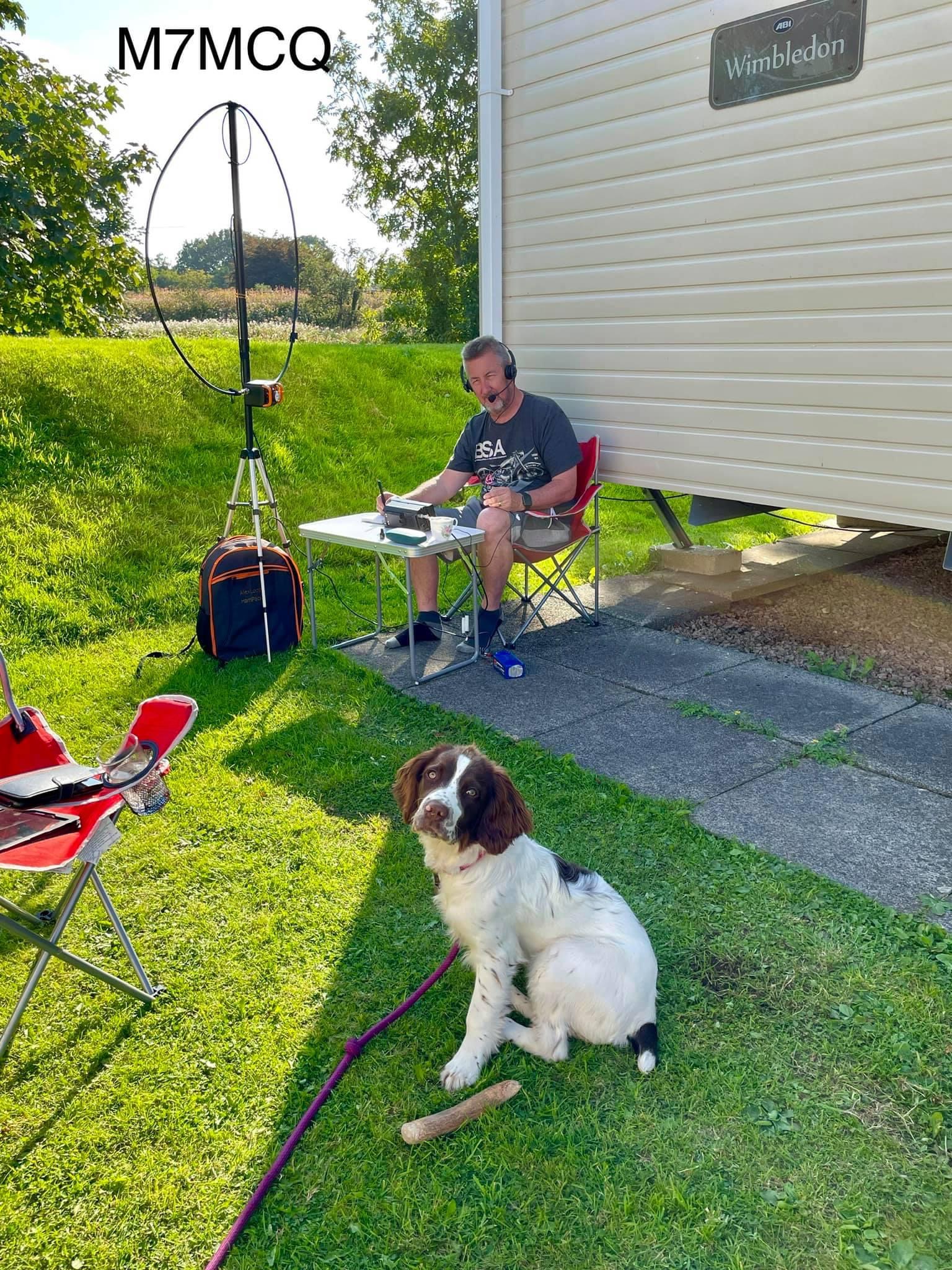
The ‘plan’ was to take a couple of weeks off work and have me a good old radio vacation, but our new puppy kinda ruined that idea! All my empty hours were filled with dog-walking instead of CQ’ing!
BETTY THE RADIO DOG
It seemed like every time I reached for my radio, young Betty (the English Springer Spaniel) would jump all over me to get me to take her for another long walk. If I ignored her pleas, she’d just just jump up on my knee to join in 😂
So I got very little done in the end. The caravan site we stayed at did not permit the erection of any antennas, so I couldn’t use my trusty and reliable SotaBeams Dipole. Instead, I used my AlexLoop HamPack, but the location wasn’t really good.
When I got home I setup on the patio and tried my Elecraft AX1 Telescopic but the bands were full of giant-power stations running an “All Asia” competition and no one was the slightest bit interested in an M7 from England 🙄
So overall, my great radio-holiday turned out to be a holiday away from radio LOL